




 Whitman Expo
-
"1759" (1965) Patterns (1965) Values
Greysheet & Red Book® PRICE GUIDE


Sort by
Sponsor

Sponsor

Sponsor

Sponsor

Sponsor

Legal Disclaimer
The prices listed in our database are intended to be used as an indication only. Users are strongly encouraged to seek multiple sources of pricing before making a final determination of value. CDN Publishing is not responsible for typographical or database-related errors. Your use of this site indicates full acceptance of these terms.
The Greysheet Catalog (GSID) of the Patterns (1965) series of Pattern Coinage in the U.S. Coins contains 36 distinct entries with CPG® values between $2,200.00 and $15,000.00.
History and Overview
An experiment by the Bureau of the Mint to determine suitable metals to replace the 90% silver coins resulted in trial strikes of dies for dimes, quarter dollars, and half dollars. The design was the same for each denomination, and the strikes conform in size to the regular coinage. Somewhat similar to the scenario of 1942, fantasy designs were prepared with no relation to current coinage motifs, in the present instance to avoid creating “rarities” by using regular dies. The dies bear neither denominations nor any inscriptions normal for circulating coins (UNITED STATES OF AMERICA, IN GOD WE TRUST, LIBERTY) and are, in effect, tokens or medals.
Edward P. Grove and Philip Fowler, both on the engraving staff at the Philadelphia Mint, designed the obverse and reverse, respectively. The pieces were supposedly struck in the following materials:14
75% copper, 25% nickel • Cupronickel-copper (multi-layer composite) • 50% silver, 50% copper • Coin silver-copper (multi-layer composite) • Columbium, aka niobium (Type I) • Columbium, aka niobium (Type II) • Zirconium • Monel (nickel-base alloy) • Nickel, 5% silicon, with magnetic core • Stainless steel (Type 301-Type I) • Stainless steel (Type 301-Type II) • Stainless steel (Type 302).
The Mint study also considered nickel and titanium but neither of these was actually tested. No records have been located on the quantities made, whether all were made inside the Mint, and what metal varieties might exist today.
Collecting Perspective
Two sets of coins (each consisting of three dimes, three quarters, and three half dollars, encased in an acrylic block) were given to the Smithsonian Institution. No others were officially distributed, but over the years, a few have been shown in numismatic circles. Their legality has not been defined.
As it is not known which pieces might survive and in what metals, each of the three “denominations” below is assigned a Judd number based on the 12 metals in the above list. Also, the values are hypothetical, in view that for some alloys there has been no confirmation of existence.
See More See Less


Sponsor

Sponsor
 Loading more ...
Legal Disclaimer
The prices listed in our database are intended to be used as an indication only. Users are strongly encouraged to seek multiple sources of pricing before making a final determination of value. CDN Publishing is not responsible for typographical or database-related errors. Your use of this site indicates full acceptance of these terms.
Available on Greysheet Marketplace
View All

Buy Now: $8,950.00

Buy Now: $5,750.00

Buy Now: $3,150.00
Auction Ends: 10/8/2026
Dealer Directory
View All Dealers





Greysheet News
View All News
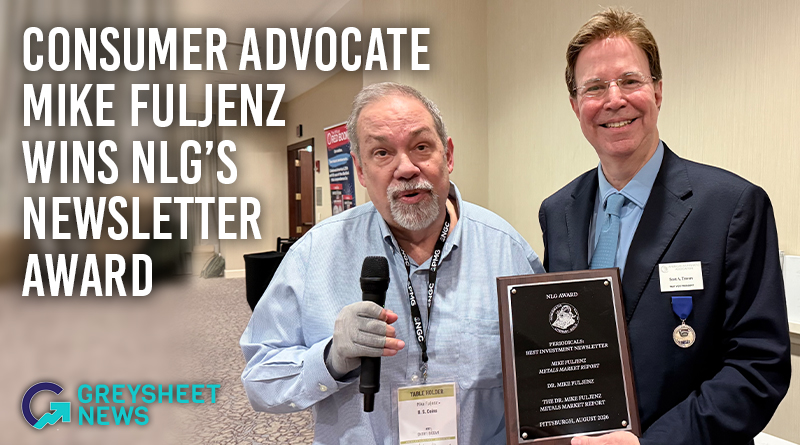
His free weekly newsletter offers insights on the coin and metals markets, and consumer education.

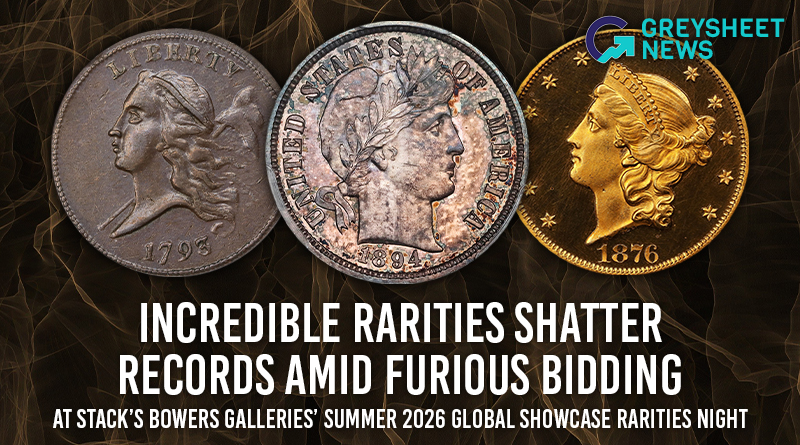
Stack's Bowers Galleries, one of the world's largest and most prestigious rare coin auction houses, is proud to announce record breaking results from the Rarities Night session of its annual Summer Global Showcase Auction.

Scandinavian gold rarities also command exceptional results.
Events
View All Events

Heritage Auctions

Wednesday, July 1, 2026
Thursday, July 2, 2026
DAVID LAWRENCE RARE COINS
Sunday, July 5, 2026